By clicking “Accept”, you agree to the storing of cookies on your device to enhance site navigation, analyze site usage, and assist in our marketing efforts. View our Privacy Policy for more information.
Barrel's Director of Strategy and Design Director hosted a live optimization session deep diving a brand who submitted their site for review, including a roadmap of fixes to implement before BFCM.
What Businesses in ChatGPT Means for CPG Brands on Shopify
Shoppers are increasingly asking ChatGPT which protein powder, hot sauce, or moisturizer to buy. Until now, brands had no official way to see how they showed up in those answers or to correct what ChatGPT said about them.
On November 10th, OpenAI opened a beta of Businesses in ChatGPT, a set of tools that lets brands claim a verified profile in ChatGPT, keep product information and pricing current, and see how often ChatGPT mentions them. Ecommerce brands based in the US can also set up a Business Agent, an AI agent that answers shoppers' product questions inside ChatGPT. OpenAI says ChatGPT reaches 1.2B people each week.
Our advice for consumer packaged goods (CPG) brands is to claim your profile now and start testing a Business Agent, even while the data is thin. Below, we cover what the beta includes, how it works on Shopify, what data it will and won't tell you, and how to prepare.
What's Included in Businesses in ChatGPT
The beta has two parts: Business Hub, which most brands can use, and Business Agents, which are currently limited to eligible American ecommerce and online service businesses.
01 | Business Hub: Claim & Manage Your Profile
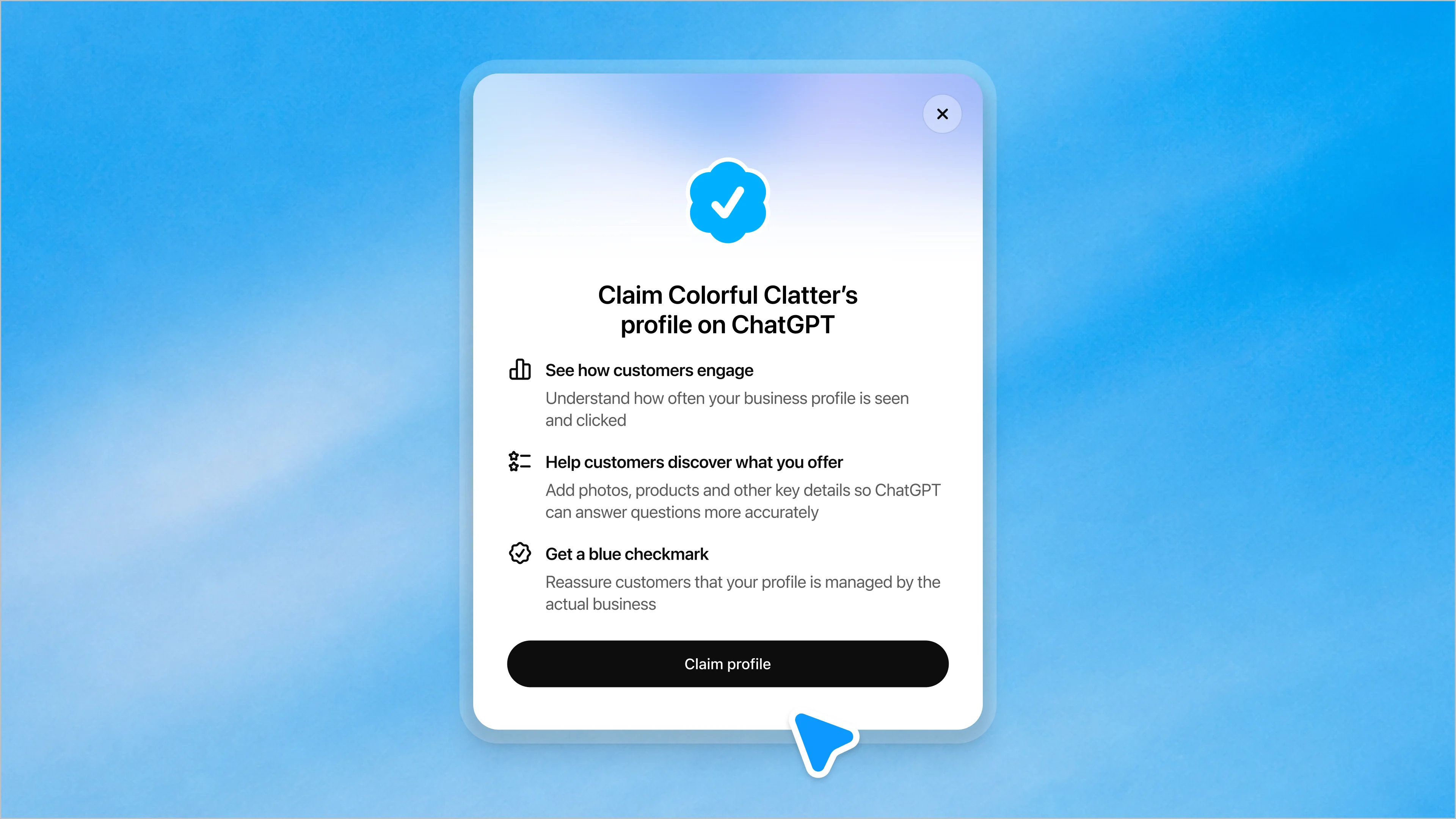
Business Hub is a new section in ChatGPT where you claim your business, verify that it's yours, and manage the information ChatGPT uses about you. According to OpenAI, any eligible business located where ChatGPT is available can claim a profile.
You can verify through your business phone number, business email, website domain, or Shopify store. Once verified, your brand gets a blue check, and you can update key details and add product feeds with pricing and availability.
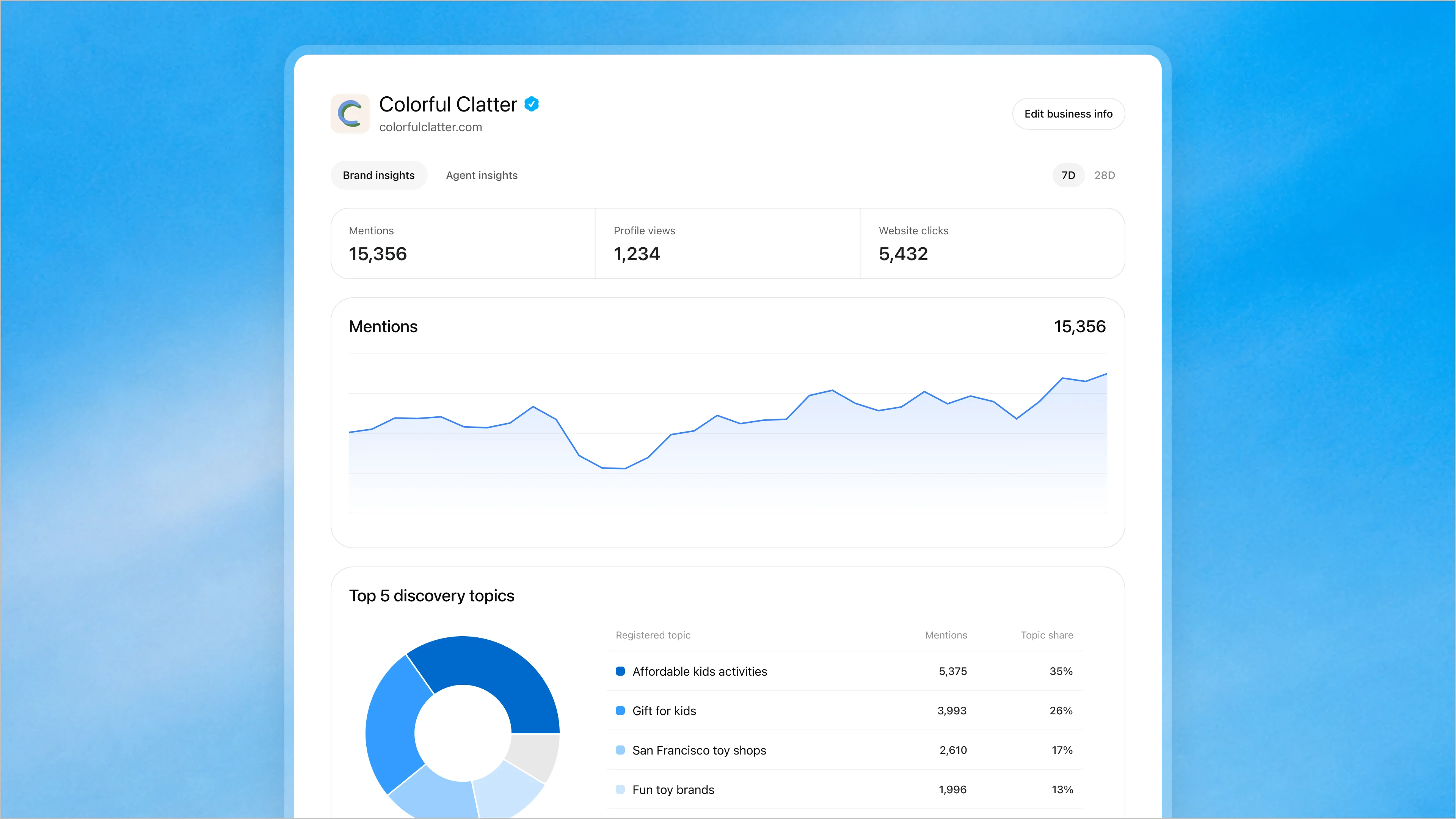
Insights: Mentions, Clicks, & Discovery Topics
Business Hub reports three metrics:
Mentions: how often ChatGPT mentions your brand
Website clicks: how many clicks ChatGPT sends to your site
Discovery topics: common themes in conversations where ChatGPT cites your site
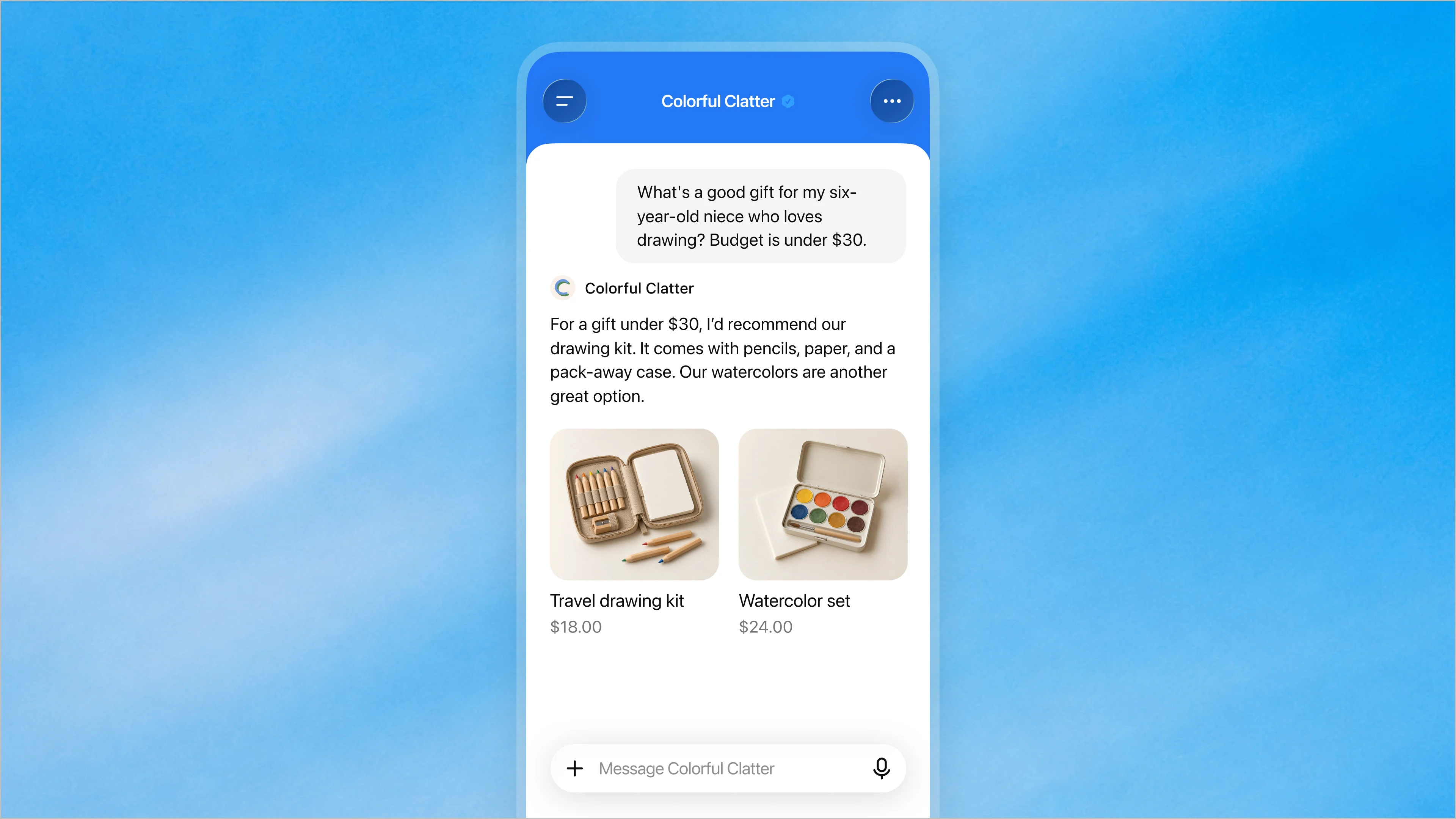
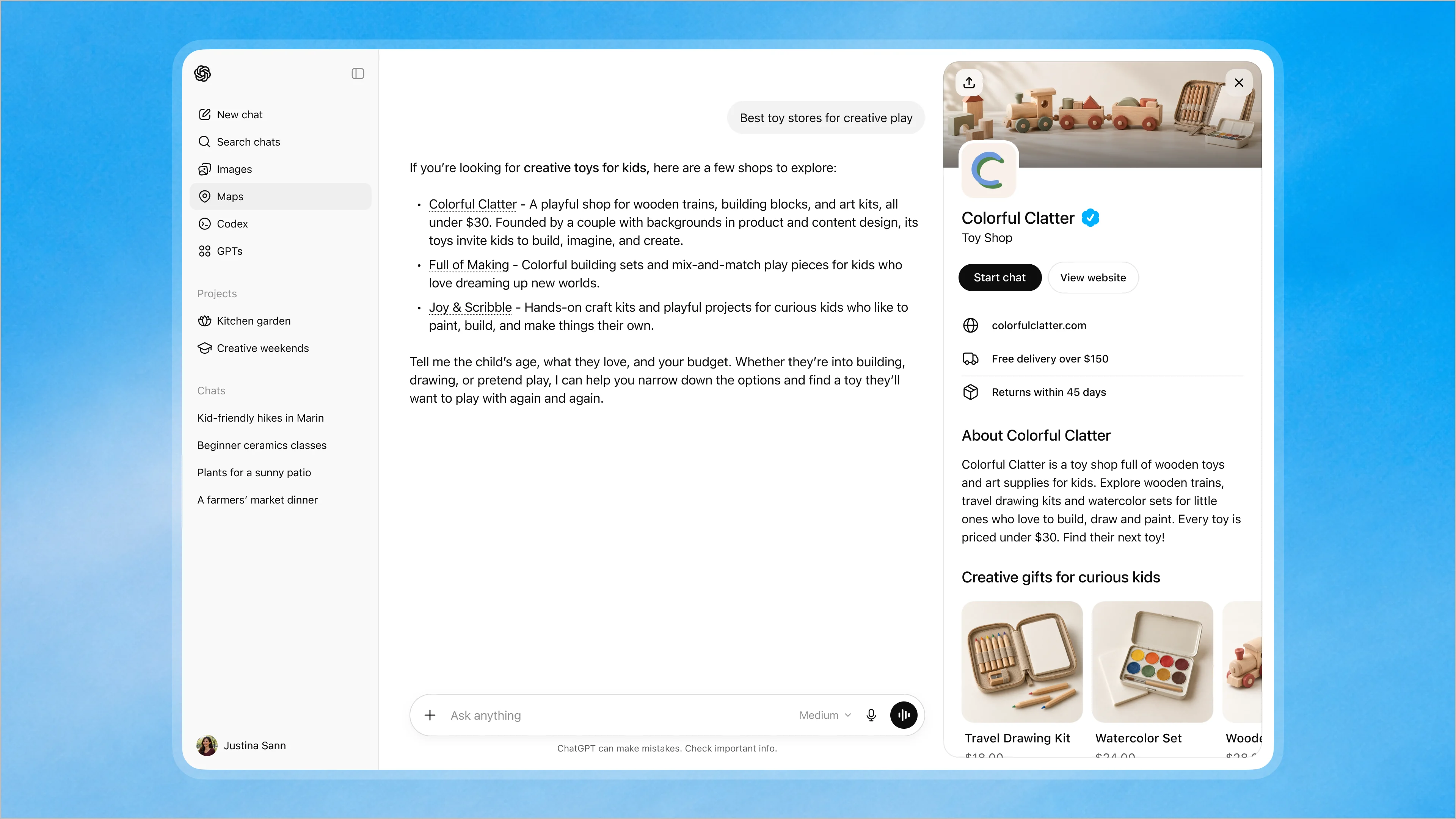
A Business Agent answers shoppers' questions about your products and policies using your product information and the guidelines you set. When your brand appears in a ChatGPT answer, a shopper can open your profile and start a separate, clearly labeled conversation with your agent.
You don't need to set up a Business Agent to appear in ChatGPT. It's an added way for shoppers to ask follow-up questions directly to your brand.
Sponsored Agents & ChatGPT Ads
Businesses in ChatGPT sits alongside ChatGPT Ads, OpenAI's paid advertising product. Ads appear below ChatGPT's responses, and brands can buy them through OpenAI's self-serve Ads Manager, currently in beta, or through agency and technology partners.
Brands can also sponsor their Business Agent and use it as the destination for ChatGPT Ads, with sponsored placements labeled. OpenAI says paying for ads doesn't change how often ChatGPT recommends a business, so the organic profile and agent are where we'd start.
When a sponsored agent is the destination, a shopper who clicks the ad starts a labeled conversation with your agent instead of landing on your site. If you're considering ads too, a few things work differently from search ads:
Targeting is conversational: instead of bidding on keywords, you write context hints describing the conversations and topics where your products are relevant, and ChatGPT matches ads to the intent of the conversation
There are no profile filters: you shape delivery through bidding, either letting the system bid automatically or setting caps on cost per click (CPC), cost per thousand impressions (CPM), or cost per acquisition (CPA)
Product feeds work here too: retail advertisers can create ads from an uploaded product feed, and OpenAI says feed-based ads have been among the strongest performers in its program so far. OpenAI's ads team told us Shopify catalogs can sync directly to Ads Manager
In our conversations with OpenAI's ads team, they shared a few recommendations for brands running a first test:
Plan for a learning period of two to four weeks while the system figures out which audiences engage, and set expectations accordingly
Start with a traffic campaign to build data, then move to a conversion-optimized campaign once the OpenAI pixel and Conversions API (CAPI) are set up
Keep the structure small, with two to four ad groups and three to five ads in each, so you can see which copy and audiences perform
Write at least 30 context hints per ad group, since more hints give the system more to match against
How Businesses in ChatGPT Works for Shopify Brands
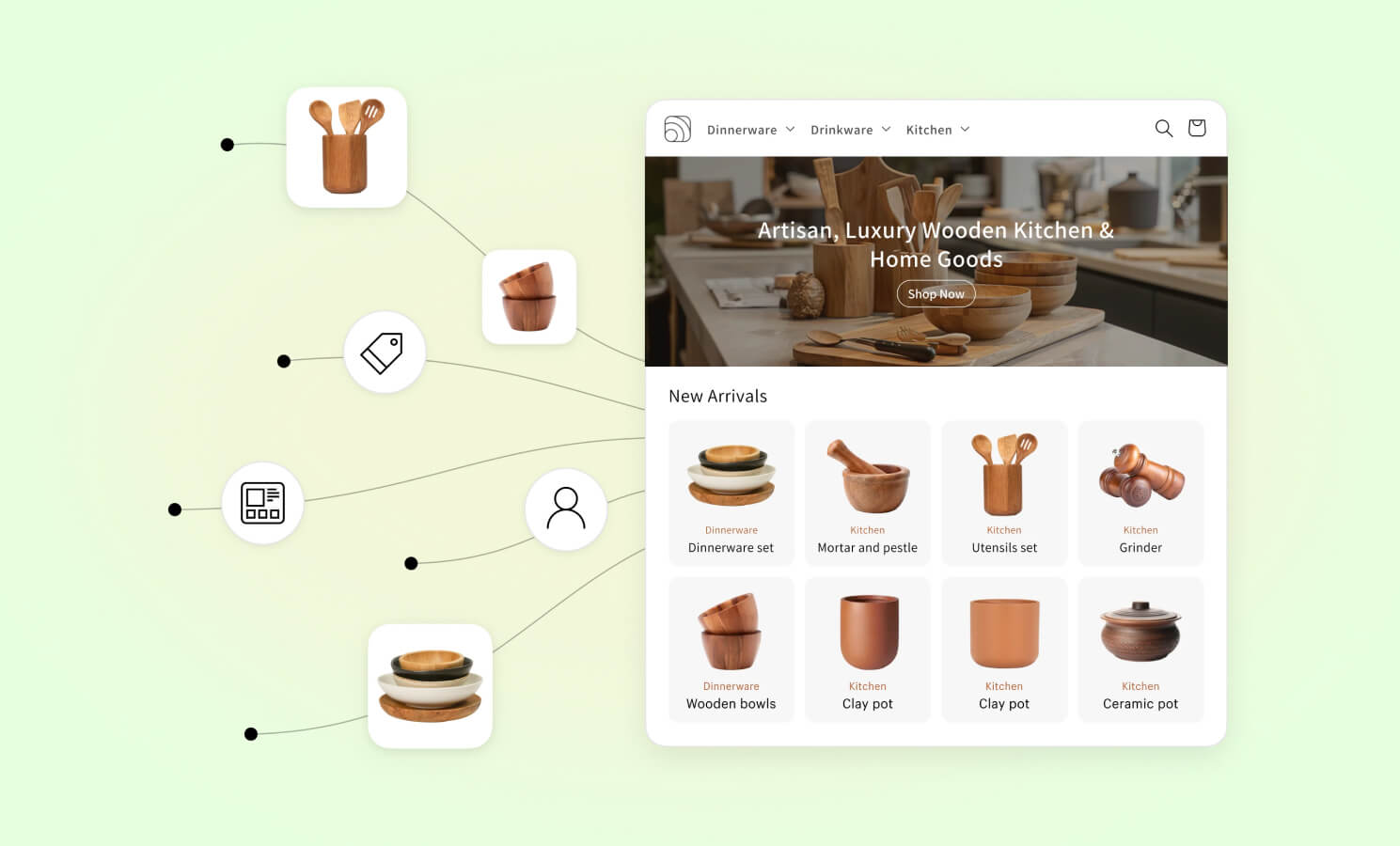
If you're on Shopify, your products are likely already in ChatGPT. OpenAI says eligible Shopify products are integrated through Shopify Catalog, the product data feed behind Shopify's Agentic Storefronts. Agentic Storefronts is the Shopify sales channel that makes your catalog available to AI assistants, including ChatGPT, Microsoft Copilot, Google AI Mode, and the Gemini app. You can check your store's eligibility under Sales channels > Agentic in your Shopify admin.
Connecting your store to Business Hub adds verification, insights, and a draft Business Agent built from your catalog. OpenAI outlines three steps for Shopify merchants:
Connect your store from your Shopify admin or from Business Hub
Review your business information, with product details, pricing, and availability pulled from your Shopify catalog
Preview your Business Agent and publish it
It's also worth checking the Agentic Storefronts page in your Shopify admin, which, according to Shopify's changelog, reports performance across AI channels and recommends improvements to your product data.
Brands that aren't on Shopify can still claim a profile directly in Business Hub and add products through a feed. If you're weighing a platform move, we break down the tradeoffs in why CPG brands are moving to Shopify.
Why We Recommend Claiming Your Brand Now
We're advising every CPG brand we work with to claim its profile now and start testing a Business Agent. Here's why we think it's worth doing early, even though it's a beta and the data will be limited at first.
ChatGPT is already describing your brand. OpenAI's profile policy says profiles can include information from other sources, and OpenAI doesn't verify every detail. Claiming your profile puts your own product information and pricing into that mix
Insights take time to build. Metrics only appear once you've claimed your profile and passed activity thresholds. Starting now gives you a baseline before AI-driven discovery becomes a bigger share of your traffic
Testing an agent teaches you what to fix. Previewing your Business Agent shows you how ChatGPT represents your products using the information you've provided. Gaps in that information show up quickly
It's free for now. There's little cost to getting in early beyond your team's time
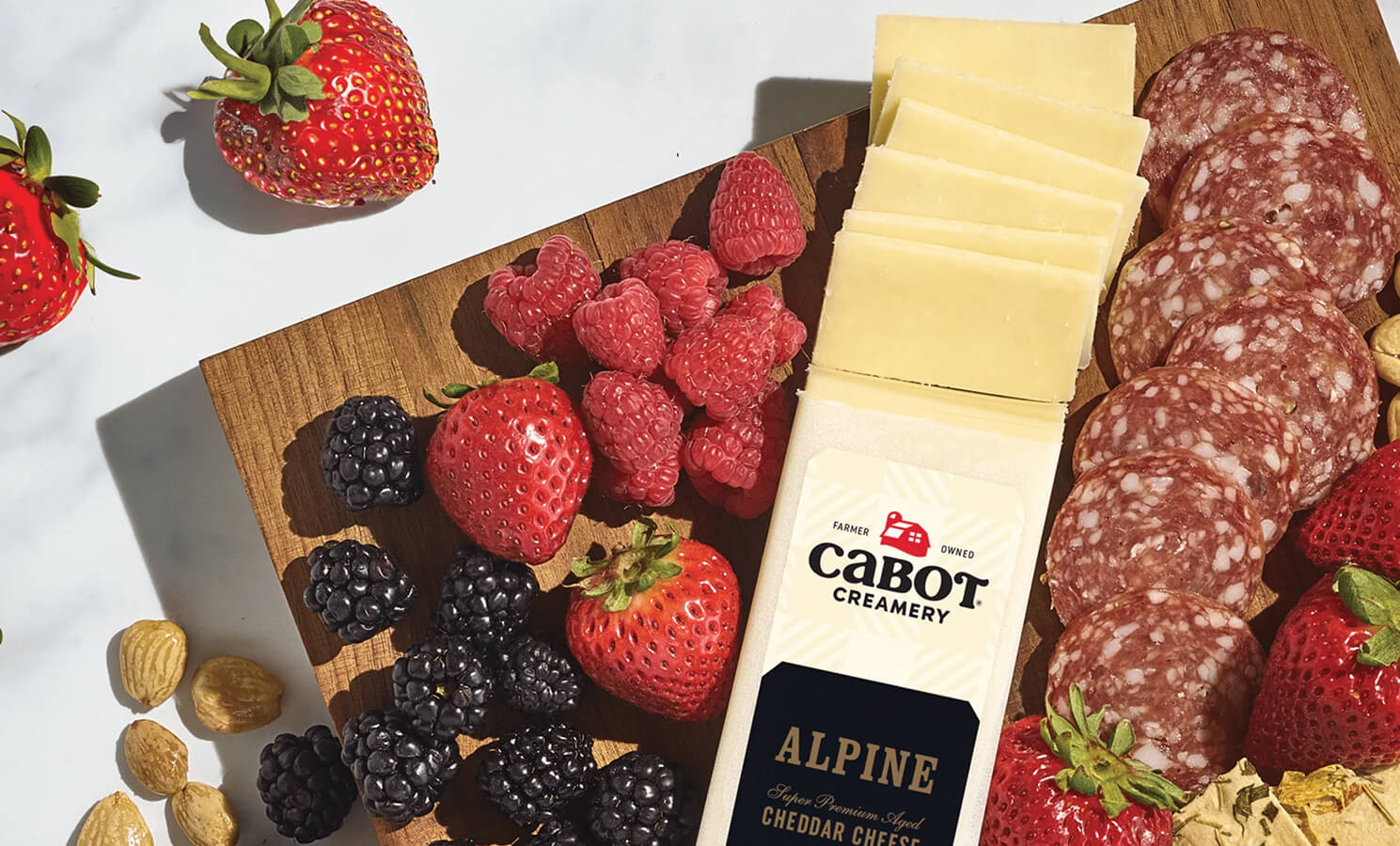
This connects to something we've been saying about Generative Engine Optimization (GEO), the practice of structuring content so AI-powered search tools can accurately find, understand, and cite it. AI models read your site, your retailer listings, your reviews, and your press, and inconsistencies between them make AI less confident recommending you. We covered this in our webinar recap of what CPG brands need to know about AI-driven discovery and saw it play out when we helped Cabot Creamery build AI authority in a competitive category. Business Hub gives you one more place to keep that information accurate and brand-aligned.
What Business Hub Won't Show You
From what has been shared so far, Business Hub tells you how often ChatGPT mentions you, but not what people asked to get your brand mentioned. An OpenAI spokesperson told Digiday that businesses "don't see individual prompts or chats." The beta also leaves out a few things CPG brands will want:
The questions behind your mentions: you'll see a mention count and general discovery topics, not the specific questions shoppers asked
Competitor comparisons: there's no share-of-voice data showing how often competitors come up in the same conversations
Other AI assistants: Business Hub covers ChatGPT only, not Gemini, Perplexity, Claude, or Google's AI Overviews
Your agent's conversations: OpenAI doesn't share Business Agent chats with businesses
So if your mentions drop, you'll see the number go down, but not which customer questions you stopped showing up for or which brand replaced you. Business Hub can only tell you something changed, but you need additional data to figure out why.
Before You Publish a Business Agent
Your Business Agent answers from your product data and the guidelines you provide, so its answers are only as good as the information you share. Before you publish, we recommend checking these areas:
Product data consistency: make sure names, ingredients, sizes, and pricing match across your direct-to-consumer (DTC) site, Amazon, and retailer listings
Policies: review shipping, returns, and subscription terms so the agent describes them accurately
Common customer questions: pull the top questions from your customer service tickets and answer them clearly on your site, ideally on your product pages and in a frequently asked questions (FAQ) section
Agent guidelines: set the tone you want and spell out what the agent shouldn't say, such as comparisons you can't support or promises about results
Claims review: health & wellness and beauty brands should put agent guidelines through the same review as site copy, since efficacy and ingredient claims carry compliance risk
Every CPG brand should claim its profile, but what you get out of it depends on where your brand is today.
Emerging brands: ChatGPT may know little about a newer brand. Claiming your profile takes little effort and gives it accurate information from day one
Amazon-led brands: a Business Agent gives you a branded conversation outside Amazon, where you can explain your products in your own words
Digitally native, performance-led brands: ChatGPT is a new referral source to track alongside paid media. While the tools are free, they're a low-cost test against rising customer acquisition cost (CAC)
Scaling challenger brands: category leaders often get recommended by default. Specific, consistent product content is how challengers earn a place in the answer
Established and multi-brand companies: OpenAI says tools for organizations with more complex needs are coming. In the meantime, assign a clear owner for each brand's profile, and if you're already an OpenAI Enterprise customer or advertiser, your OpenAI representative can help with setup
Not right now. OpenAI hasn't published pricing for Business Hub or Business Agents. Digiday reported that both are free for now, and that OpenAI's VP of Monetization didn't rule out a paid model later. Advertising is separate: sponsoring your Business Agent through ChatGPT Ads is paid.
Do I need Shopify to claim my brand?
No. Any eligible business can claim a profile directly in Business Hub. Shopify makes it faster, since connecting your store handles verification and pulls in your catalog.
Can brands outside the US use it?
Yes, for Business Hub. Eligible businesses can claim a profile wherever ChatGPT is available. Business Agents are limited to eligible US ecommerce and online service businesses for now.
Does advertising change how often ChatGPT recommends my brand?
OpenAI says it doesn't. Sponsored placements are labeled and kept separate from ChatGPT's organic answers.
Can I see what customers asked ChatGPT about my brand?
No. Business Hub shows mention counts, website clicks, and general discovery topics, but not individual prompts or Business Agent chats.
Do I need a Business Agent to show up in ChatGPT?
No. ChatGPT can mention and recommend your brand without one. An agent gives shoppers a way to ask your brand follow-up questions directly.
Get Help Setting Up Businesses in ChatGPT
We're helping our CPG clients claim their profiles, connect their Shopify stores, and test their first Business Agents. If you'd like a hand getting set up, we're happy to help.
And if you want to go past the mention count, we've been building a dashboard that shows the questions customers ask ChatGPT and connects them back to sales. Get in touch to see how it works for your brand.