Eighteen months ago, Sidekick was a new feature. At Shopify's DotDev conference, Shopify's Head of Partnerships, Atlee Clark, presented it as a platform in its own right, and the numbers behind it are worth sitting with: 32 million analytics reports generated, 25 million flows built, 3.4 million customer segments created, and 600K flow automations now running every single day.
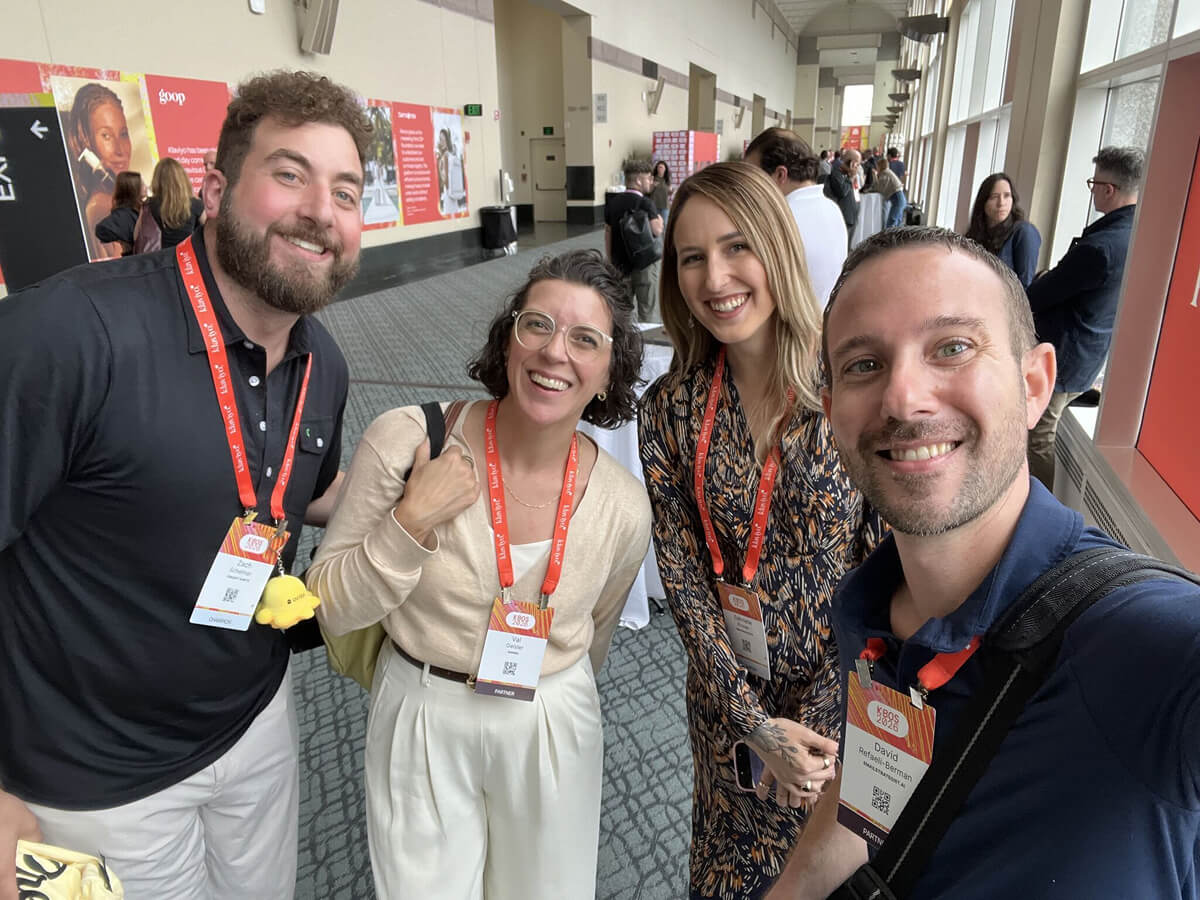
Barrel's CEO, Lucas Ballasy, and Director of AI & Solutions, Nick Meyer, attended the keynote, and both came away thinking about the same thing every brand and agency should be considering right now: with an AI assistant able to build automations, reports, and custom apps on its own, which parts of the work are best done by people, and where is AI the better partner for the job?"
What Can Sidekick Do?
The keynote's Sidekick numbers show a shift from a helpful chat assistant to genuine operational infrastructure. Sidekick App Extensions launched about six weeks before the conference with 18 launch partners, and in that short window, it has already powered 500,000 conversations that involved a partner app taking a real action, not just answering a question. More than 160 apps are now integrated, and Shopify is encouraging every app developer on the platform to plan a Sidekick integration going forward.
Perhaps the more interesting data point is what happened without any push from Shopify at all: merchants independently discovered that Sidekick could generate custom apps, and thousands of them have built their own, covering everything from restocking reports to warranty management tools.
The Thesis: Data, Taste, and Distribution
The keynote closed with a broader argument about what happens to ecommerce work as code itself becomes commoditized, meaning AI can generate functional code and applications on demand, without a developer writing it line by line. If Sidekick can build a flow, a report, or a custom app on request, the value of simply knowing how to build is dropping fast. What Shopify's team argued will endure are three things: data, taste, and distribution.
Data means the unique, merchant-specific insight that actually drives sales, the kind of pattern recognition that comes from working inside a brand's numbers over time, not a generic best practice. Taste means a genuine point of view, the specific cultural or trend judgment that shapes a strong campaign, a strong product page, or a strong merchandising decision, and that a general-purpose AI model does not have on its own. Distribution means the trusted relationships an agency or partner has built with a base of merchants, the kind of trust that determines whose recommendations a brand actually acts on.
What This Means If You Work With an Agency
This thesis is a useful lens for CPG brands evaluating who they work with going forward. If a partner's value is mostly "we know how to configure Shopify," that value is eroding as tools like Sidekick make configuration faster and more self-service. The partners worth keeping are the ones bringing something Sidekick cannot: judgment about your specific brand, informed by your specific data, backed by a relationship you trust.
It is also a useful lens for how CPG brands should think about their own internal teams. The people worth investing in are not necessarily the ones who know the platform best. They are the ones who understand your customers, your category, and your brand well enough to know what to build, even if an AI assistant ends up building it.
Where This Connects to AI-Driven Discovery
Barrel's take: this thesis does not stop at internal operations. The same data, taste, and distribution that make a Sidekick automation useful are exactly what determine whether AI models recommend your brand to a shopper in the first place. Generic content does not get cited. Content shaped by real knowledge of your customers and your category does. We cover this in depth in our webinar on AI-driven discovery for CPG brands, and in our breakdown of the free Shopify tools that support this kind of work, including Sidekick itself. Download the free recording here.
Want to talk through what this shift means for your team, your tooling, and your Shopify setup? Reach out at barrelny.com/contact.




.jpg)