By clicking “Accept”, you agree to the storing of cookies on your device to enhance site navigation, analyze site usage, and assist in our marketing efforts. View our Privacy Policy for more information.
Barrel's Director of Strategy and Design Director hosted a live optimization session deep diving a brand who submitted their site for review, including a roadmap of fixes to implement before BFCM.
Is Your Ecommerce Team Too Small For Your Platform?
Most CPG brands do not have a 10-person ecommerce team. Many have one or two people also managing retail, Amazon, B2B, and DTC at the same time. If every basic update, a new landing page, a homepage banner swap, a product description change, requires filing a ticket and waiting three weeks for a developer, the problem is not your team. It is your platform.
The Recurring Pattern
Legacy platforms like Salesforce Commerce Cloud (SFCC) or Magento (Adobe Commerce) require dedicated developers for routine changes. That is fine for a brand with a large in-house engineering org. It is a serious constraint for the brands with founder-led teams, small marketing departments, or operators wearing five hats across every channel their brand touches.
The result is a familiar cycle. A brand wants to launch a subscription program, run a seasonal campaign, or add a store locator, and the answer is always the same: that will be a custom build. Months pass. The team stops asking, and the site stops evolving.
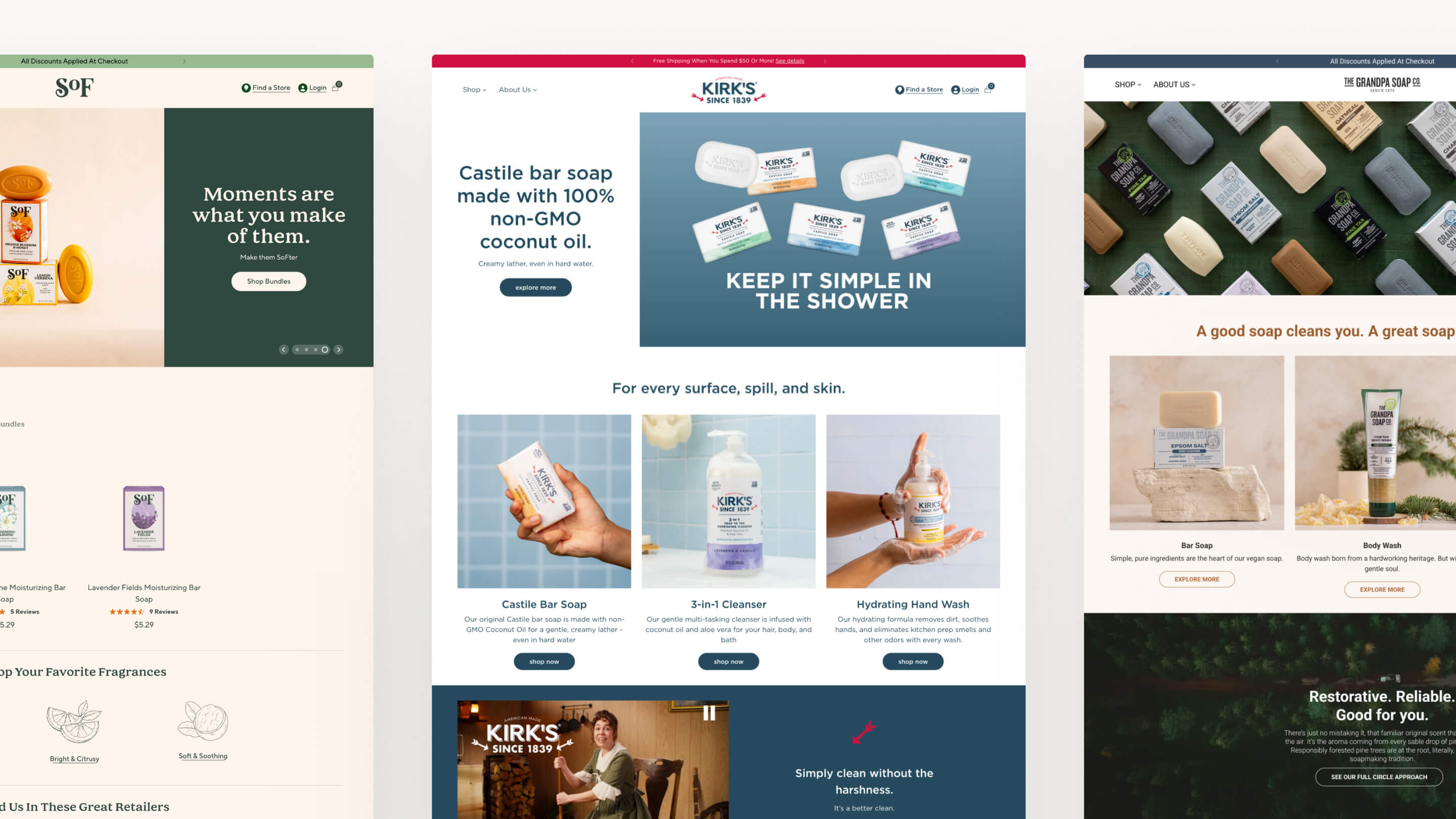
The shared foundation means a small internal team can manage all three sites without a developer for day-to-day work. Just as important, an improvement made to one brand's site, a new page section, an updated feature, carries over to the other two instead of being rebuilt from scratch each time.
Why This Matters More Than Team Size Suggests
A lean team is not a weakness to work around. It is a constraint that should shape the platform decision itself. Shopify's merchant admin is built for marketing teams to operate independently: launching pages, updating navigation, managing a blog or recipe library, without a developer in the loop for routine work.
That autonomy only pays off if the site is structured for the people running it. Content operations, who updates what, how often, through which tools, should be a decision made during the migration project, not something discovered as a gap after launch.
What to Ask Before You Migrate
Who on your team will actually be updating the site day to day?
How many of your current site's routine changes require a developer today?
What does your team want to be able to do that your current platform makes impossible?
Get the Full Picture
Our Shopify Migration Playbook for CPG brands covers exactly how to plan a migration around your team's actual size and bandwidth, not the assumption that more hands are needed than you have.