By clicking “Accept”, you agree to the storing of cookies on your device to enhance site navigation, analyze site usage, and assist in our marketing efforts. View our Privacy Policy for more information.
Our CPG migration playbook covers what happens to your data, subscriptions, and SEO, and how to scope the project before you commit, from our experience moving brands like McCormick, Bobo’s, and Once Upon a Farm to Shopify.
The Bets Behind Plainspeak's Launch: Lessons for Emerging CPG Brands
Many consumer packaged goods (CPG) founders launch their first brand with little insight into how other brands got off the ground. The team behind Plainspeak had the opposite experience. They'd spent years advising CPG brands as Goldilocks, a brand and commercial strategy consultancy. Between them, the founders have worked with more than 200 brands and knew how hard a launch can be. They went ahead anyway, making a few deliberate bets that break from the usual playbook.
On November 19th, Barrel CEO Lucas Ballasy sat down with Sara Brooks, Co-Founder of Plainspeak and Goldilocks, to talk through those bets: what they tested, what changed, and what they'd tell anyone thinking about launching a CPG brand. Below are the most useful takeaways from that conversation.
Key Takeaways
01 | Start With a Problem You Can See Firsthand
Plainspeak started in the founders' group chats. Sara, Heather MacNeil, and Rachel Pollard Moore are in their mid-40s, living in San Diego, Maine, and Ohio. Their friends kept asking the same questions: Which supplements do I actually need? Is any of this working? Why does my counter look like a pharmacy?
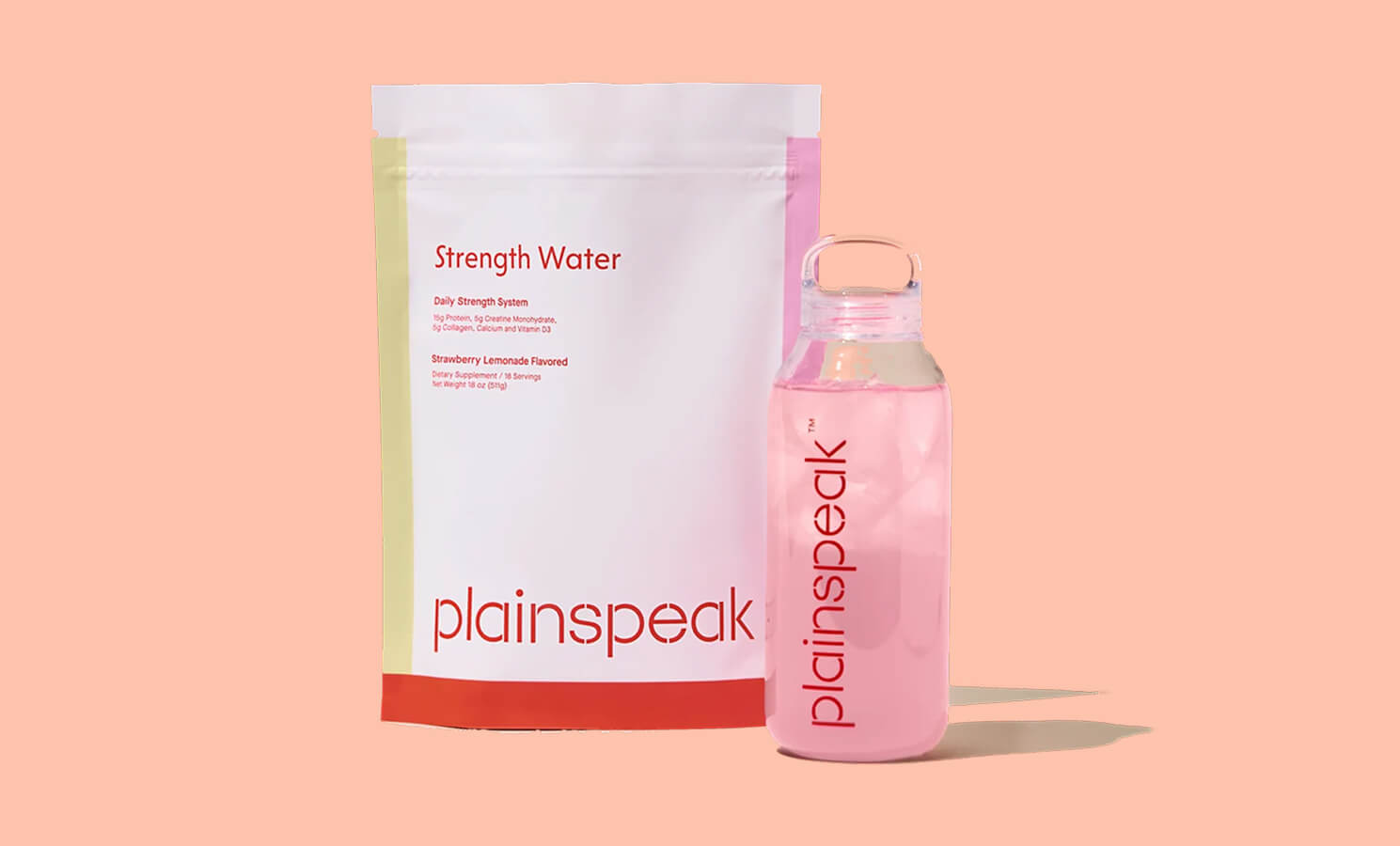
Strength Water
The founders had promised themselves they'd only launch a brand if the need was obvious, and this one was. Their Goldilocks research confirmed the gap, since most of the consumers they interview for clients are women 35 and older. The result is Strength Water™, a strawberry lemonade drink mix with 15 grams of grass-fed clear whey protein, five grams of creatine, five grams of collagen, calcium, and vitamin D3. The lesson for other founders is simple: the strongest positioning often comes from a problem you and the people around you already have.
02 | Treat Your Launch as a Beta
Plainspeak launched in late summer 2026 with what the team calls its founders batch, a beta release meant to test product-market fit and positioning before a full commercial launch. Sara explained that in consumer research, people can only imagine how a product will taste and feel. A real product removes the guesswork.
The feedback led to real changes. The team is reducing the sweetness, adding an unflavored variant for women who want to mix it into coffee or smoothies, and improving how well the powder dissolves. Plainspeak plans its commercial launch in Q1 2027 with a product that's been shaped by the women drinking it, without the risk of a large inventory order placed on assumptions.
03 | Hold Off on Paid Media to Get a Clean Signal
The Goldilocks team writes paid media plans for clients, so skipping Meta ads at launch was a conscious choice. They wanted a clean read on how people found the brand and what resonated, without paid reach distorting the data.
Sara was clear that this was never a permanent position. In the vitamins, minerals, and supplements (VMS) category, paid media is hard to avoid at scale. But when Plainspeak does run ads, the team already knows what they'll sound like: funny, educational, and never fear-based. Starting without ads gave them the customer insight to make those ads better once they are ready to launch.
04 | Go Where Your Customer Scrolls
The team's original plan was to build community on Facebook, where many moms are already active in school and neighborhood groups. In practice, they found that their customer was on Instagram instead, often scrolling late at night. They shifted their focus to a private Instagram community where women talk openly about everything from hot flashes to magnesium to mom guilt.
It's an easy mistake to plan around where you think your customer is. Plainspeak tested the assumption early and adjusted quickly, before they'd committed a budget to the wrong channel.
05 | Ask Customers Directly, Including the Ones Who Left
Plainspeak's feedback process is refreshingly direct. The team runs polls in its community, invites customers to write guest essays, and emails people who bought once and didn't come back to ask why.
"Tell us, co-founder to consumer. You're not going to hurt our feelings." - Sara Brooks, Co-Founder, Plainspeak
They also celebrate milestones customers can feel. When the first order arrived from someone none of the founders knew, the team sent her merch and asked to film a video with her. Lucas shared a similar habit from a CEO he knows, who used to spend an hour every Friday calling the week's top customers to thank them.
06 | Small Advocates Beat Big Creators
Plainspeak's growth so far has come from word of mouth: friends of friends, forwarded newsletters, and fitness instructors who asked to host pop-ups or become ambassadors. Sara sees the same pattern across the industry. A post from a celebrity may drive awareness, but a creator with 5K followers, most of them local parents, often drives more sales.
The team is now testing affiliate rewards for everyday customers. Sara noted that even $5 or $10 matters to someone who's already recommending the product to friends, because it rewards something she's doing anyway.
"We trust the recommendation from our friend more than our doctor or our mother, because she's in this stage of life and has probably tried the 10 things we're about to try." - Sara Brooks, Co-Founder, Plainspeak
07 | Two Buyers Need Two Kinds of Education
Plainspeak found two distinct customers. The first already takes supplements and wants a simpler routine or a better taste or format. The second knows she needs supplements, often because a doctor recommended creatine or collagen, but finds the category intimidating and struggles to stay consistent with pills.
Each group needs different messaging and education. Both groups also struggle to find a brand that feels made for them. Sara noted that many women buy supplements marketed to Gen Z because those brands fill their social feeds, even though they don't see themselves in the branding. The alternative, a generic multivitamin from the drugstore or Amazon, feels uninspiring. Plainspeak addresses both problems: one scoop replaces several products, and the brand speaks directly to women in midlife.
More From the Session
Why Operating a Brand Makes Better Advisors
Plainspeak is the first brand from the Goldilocks incubator, self-funded to this point. The team is now raising money to commercialize the business and hire a direct-to-consumer (DTC) growth lead. Sara described the two businesses as mutually useful: client work makes them sharper operators, and running Plainspeak makes their client advice more grounded.
Your Own Money Changes Every Decision
Sara admitted that spending their own money felt different. The team chose to invest heavily in the parts customers experience directly: ingredients, formula, packaging, design, and the site. Then they had to hold the line on not marketing, even with a long list of ideas they wanted to try.
AI Makes Early Consumer Research More Accessible
Sara's main advice for first-time founders is to become obsessed with your consumer: where she shops, what she reads, which brands and creators she follows, and what's in her cart. Talking to real people is still the best way to learn that. She suggested founders use AI tools like Claude to draft interview questions, so they can test whether a real white space exists and which tensions in the category matter most, whether that's price, taste, or brand experience.
"It's easier than ever to launch a brand, and it's harder than ever to build a sustainable brand." - Sara Brooks, Co-Founder, Plainspeak
Building a Site for a Brand With No Ad Budget
With no paid acquisition and no retail at launch, Plainspeak's site is its only sales channel. Barrel built the site on Shopify around a referral loop: subscribers get codes to send free samples to friends, so sharing feels like a gift. The product page and science page lead with research and ingredient transparency for a skeptical customer, and the About page puts the founders' story front and center.
Pre-Launch Readiness Checklist
Use this to see how ready your brand is for launch:
You can describe where your core customer shops, what she reads, and which brands she follows
Your product, taste, and positioning have been tested with people outside your personal network
You have a way to collect feedback from early customers, including people who bought once and didn't return
Your channel plan is based on where customers actually spend time, not where you assume they do
Your site makes it easy for early customers to share the product with friends
You've decided what will trigger your first paid media spend
You've written down the opportunities you're saying no to this year
Every product claim on your site matches the evidence you have
Work With Barrel
Barrel designs and builds Shopify sites for CPG brands, from first launches like Plainspeak to multi-brand portfolios. If you're preparing to launch or relaunch a brand and want a site built around how your customers actually buy, get in touch with our team.