By clicking “Accept”, you agree to the storing of cookies on your device to enhance site navigation, analyze site usage, and assist in our marketing efforts. View our Privacy Policy for more information.
Barrel's Director of Strategy and Design Director hosted a live optimization session deep diving a brand who submitted their site for review, including a roadmap of fixes to implement before BFCM.
Why Your Website Matters More After You Launch in Retail
Retail is often treated as the moment everything changes for a brand. It brings scale, visibility, and a level of validation that is hard to replicate elsewhere. Being on shelf means reaching customers who may have never encountered the brand before, and for many teams, it marks a major milestone.
What tends to get overlooked is what happens immediately after.
Retail creates awareness, but it doesn’t provide much space to explain the brand. A customer might see the product, pick it up, or make a mental note, but the decision is rarely fully formed in the aisle. At some point, they look for more context, and that usually leads back to the website.
This is something we see consistently in our work with brands entering retail. Traffic patterns shift. More people are coming to the site after seeing the product in-store, trying to understand what it is, why it matters, and whether it’s something they want to come back to.
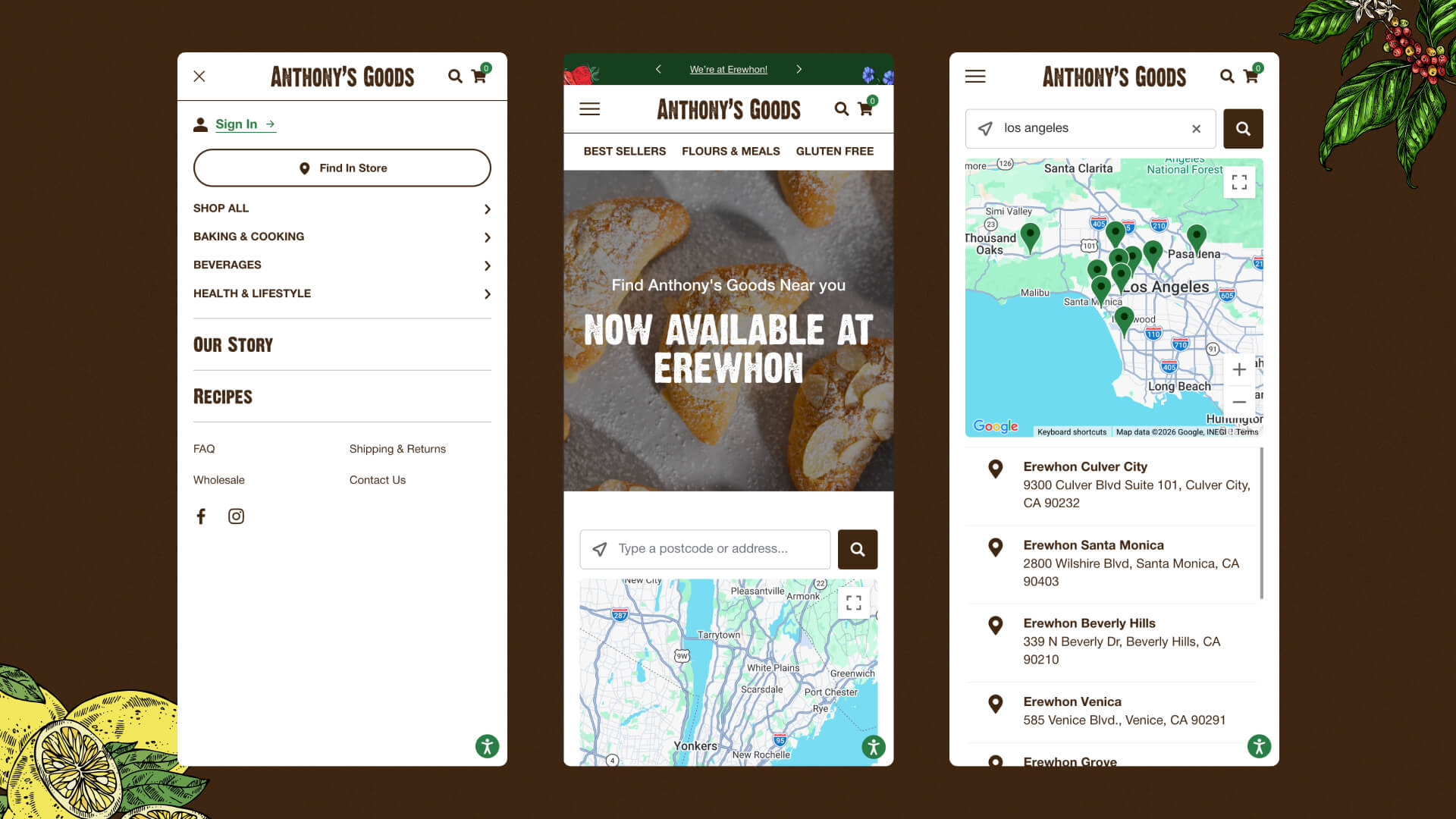
Anthony’s Goods is a strong example of this shift. The brand built a solid foundation on Amazon, which we carried into their DTC channel and more recently into retail with partners like Erewhon. As they expanded, the role of the website evolved from driving a single transaction to supporting discovery, building trust, and helping customers navigate a broader, more complex catalog after encountering the brand in new contexts.
When the site isn’t built for that moment, it creates friction. The product may have captured attention on shelf, but the experience doesn’t carry that momentum forward. Instead of reinforcing the brand, it feels disconnected from it.
This is where digital becomes critical. The website is the one place where a brand has full control over how it shows up. It’s where it can expand on what couldn’t fit on the packaging, introduce the full product range, and help customers understand how everything fits together.
In this context, DTC plays a different role. It’s not just about conversion. It’s about continuity. Retail drives awareness and trial. The website supports understanding, builds confidence, and creates a path to repeat purchase.
The brands that navigate this well treat the website as an extension of the shelf, not a separate channel. It reflects the same positioning, reinforces the same messaging, and gives customers a clear next step, whether that’s buying directly, finding a store, or exploring more of the product line.
Getting into retail is a milestone, but it also raises the bar for what the digital experience needs to do. The brands that recognize that shift are the ones that turn initial exposure into something that actually compounds.